



A significant recent study by Historic England has revealed that communities across the country place significantly higher value on historic churches than on their modern counterparts—regardless of spiritual affiliation or church attendance.
The findings, based on a large-scale economic evaluation, suggest that the unique character and cultural significance of historic places of worship carry a “heritage premium” that resonates deeply with the general public.
The research, which surveyed over 4,500 people in a series of economic experiments, found that individuals are willing to pay way more to preserve historic churches.
On average, regular churchgoers were willing to contribute £15.40 towards restoring a historic church, in comparison with £3.80 for its modern counterpart.
Among non-regular church users – almost half of whom had not attended a church up to now 12 months – respondents were still willing to pay £6.30 for historic preservation, as opposed to simply £0.40 for a contemporary church.
The study used an progressive methodology referred to as Discrete Choice Experiments to find out the precise value of a church’s physical features from its religious functions or community activities.
Participants were shown various church improvement scenarios with differing costs and were asked to make a choice from them. The only distinguishing factor was whether the church was historic or modern.
The research demonstrated that individuals see historic churches not merely as places of worship, but as irreplaceable parts of their local and national heritage.
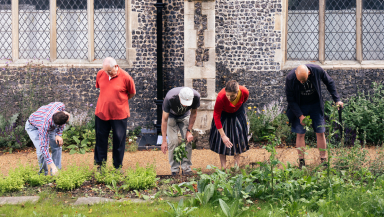
Respondents also expressed strong support for community-oriented uses of churches, reminiscent of food banks, warm spaces, and cultural events.
Interestingly, the study also found that public support was lowest for digital technology upgrades, suggesting that structural preservation and heritage character remain the highest priorities for most individuals.
These results come at a critical time, with many churches across England facing steep repair costs and shrinking financial support.
The findings offer strong economic justification for policymakers and heritage organisations to proceed funding the maintenance of historic churches, Historic England said.
Senior Economist at Historic England, Thomas Colwill, said: “This research provides clear, quantifiable evidence that historic churches matter deeply to the general public, no matter whether or not they attend religious services.
“These buildings are a part of our shared national story, and folks value them not only as places of worship, but as enduring landmarks that connect us to the past.”

