



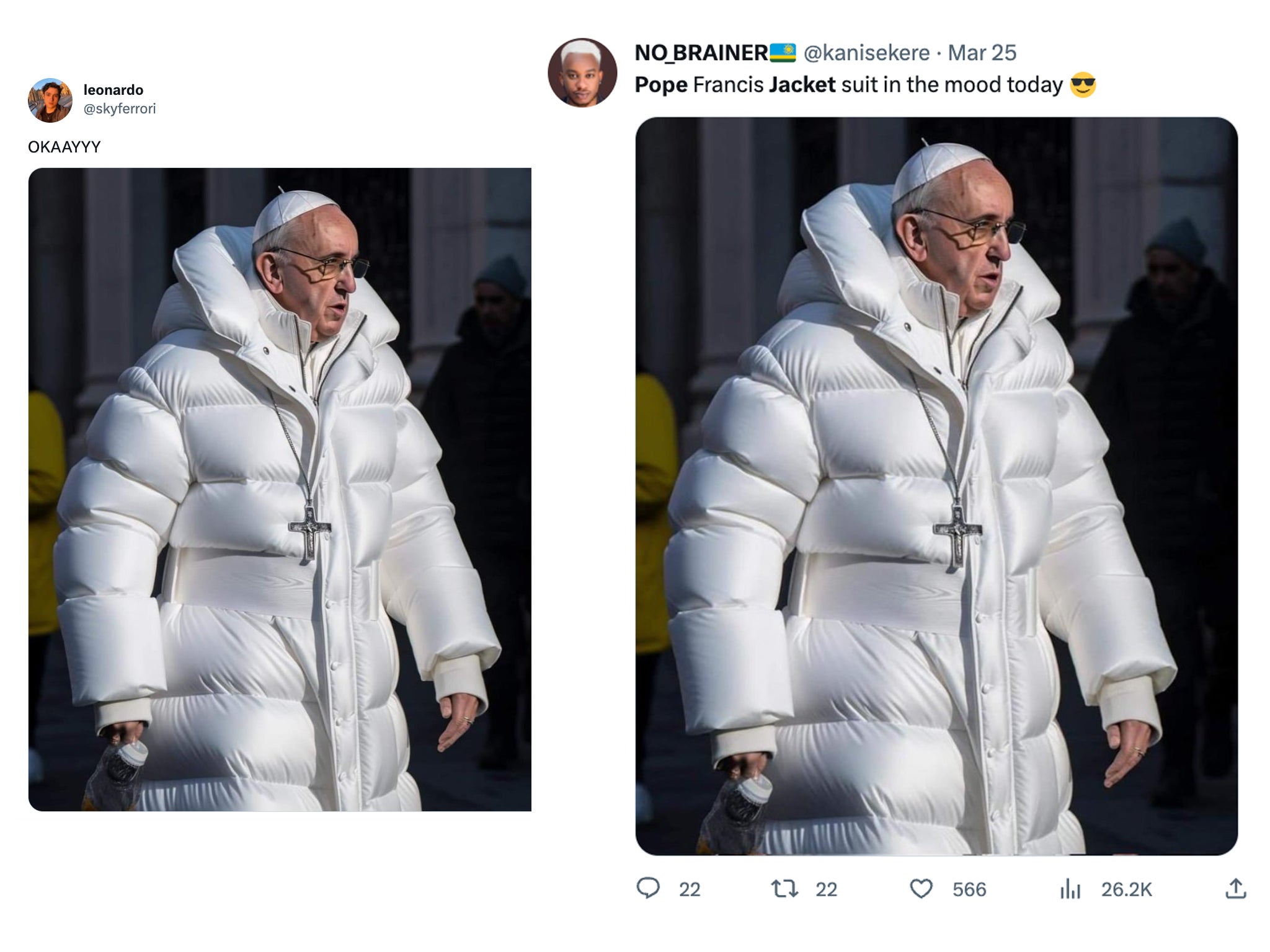
From papal selfies to the viral generative AI images featuring a classy puffer jacket, Pope Francis became a distinguished popular culture figure during his papacy.
News media called him the “People’s Pope”, branding that also circulated online on social media to show Pope Francis into an icon who symbolised the progressive ideals of 2010s popular culture.
His 2013 election was significant for a lot of reasons, including the incontrovertible fact that he became the primary Jesuit and first pope from Latin America. His acension to the papacy represented an attempt by the Catholic Church to rebrand itself through Francis’s “progressive” public image.
The Catholic Church as an institutional brand has been on the centre of diverse scandals and controversies after committing grave injustices for generations.
Pope Francis, however, became what branding expert Douglas Holt calls an “iconic brand”. These are entities that function powerful symbols that reflect cultural myths and ideals.
Just like politicians or celebrities, popes also need branding to develop their public identities.
Branding and the papacy
Pontiffs have at all times been subject to branding, making them unique subjects for public fascination and popular culture. Decisions about what shoes to wear and what papal name to take are in truth acts of branding.
Pope Francis selected his papal name to align himself with Saint Francis of Assisi. He also selected to wear an easy white cassock for his first public appearance on the balcony at St. Peter’s Basilica. These decisions were branding strategies.
Francis’s use of social media brought the papacy right into a recent digital age. It provided him with a platform to construct his brand in a fashion much like politicians.
His embrace of technology made him appear “cool”, resulting in a decade of viral social media posts and memes. The first papal selfie, taken in 2013 with teenage pilgrims visiting the Vatican, went viral on Twitter.
Iconic brands cannot act alone to keep up their cultural status. As Holt explains, they rely upon “co-authors” to create myths that connect brands with the general public. Co-authors are media texts or cultural groups circulating stories that give intending to iconic brands.
From the outset, news media were an integral a part of constructing the pope’s image. Francis was Time magazine’s 2013 Person of the Year, and graced the quilt of Rolling Stone.
He was largely unknown across the globe prior to becoming pope. Media coverage played a very important role in presenting his brand to global audiences as news reports suggested Francis’s humility, compassion for the poor and radical approach to the papacy would transform the Catholic Church.
Just days after his election, The Washington Post labelled Francis “the People’s Pope”. This title connected Francis to figures like Princess Diana, the same iconic figure known for difficult protocol and her progressive charity work who was dubbed “the People’s Princess”.
A ‘progressive’ image
After legacy media bolstered his iconic brand as “the People’s Pope”, Pope Francis reinforced this messaging through strategic, selective actions.
Francis became pope during Barack Obama’s presidency within the United States. The two men shared some similarities, including representing different “firsts”.
Francis was aware of his iconic brand as “the People’s Pope”. Like Princess Diana, this branding allowed him to appeal to a worldwide audience, regardless of spiritual affiliation.
His first official trip was to the Mediterranean island of Lampedusa, holding mass for asylum-seekers and migrants.
His response of “who am I to guage?” to a media query concerning the Catholic Church’s position on 2SLGTBQ+ issues gained positive media coverage.
In 2015, Francis published his first papal encyclical focussed on the connection between climate change and global poverty.
Pope Francis developed an iconic brand that connected with the general public during a decade defined by progressive ideals as legacy and social media worked together as co-authors in constructing his identity.
Iconic brands can transform the institutions they represent. Pope Francis’s image demonstrates how papal branding is not any different than other types of branding. It is determined by different dynamics coming together at the correct moment to form myths for public connection.
Memes related to the movie Conclave are already going viral on social media. The recent pontiff will enter a unique cultural landscape than Pope Francis, however the strategies for creating an iconic brand remain the identical.
Aidan Moir is an Assistant Professor within the Department of Communication, Media and Film on the University of Windsor
This article was originally published by The Conversation and is republished under a Creative Commons licence. Read the original article

