



Mourners packed into St Peter’s Square, many kneeling on the black cobbles, matching spiritual grief with physical suffering because the sun beat down on the Vatican funeral of Pope Francis.
At the farewell for a pontiff who blurred the road between religion and the actual world, it was no surprise that politics hung within the air.
As tens of hundreds of Catholics poured through Rome towards the Vatican, there was a transparent divide among the many faithful: between those that bade Francis farewell and people who mourned his loss.
Pope Francis modernised Catholic liturgy within the West, however it was his championing of causes often related to “liberals” – notably the rights of the gay community, the trans community, migrants, and the old-fashioned economics of charity and fairness – that marked his rule.
John Maher, a visitor from Cardiff, said that Francis’s predecessor, Benedict XVI, “was a correct theologian”. Benedict was a conservative who held tradition dear inside the church and took less interest in secular and political matters, preferring to draw back from the church’s left and liberation theology.
Mr Maher said Francis, a Jesuit from Argentina who lived through South American dictatorships, had taken a more inclusive approach.
“I don’t think Pope Francis was in the identical vein. He made quite just a few changes in his pontificate, whether all of us consider they’re for the nice or not,” Mr Maher said.
He preferred to not be drawn on where the last pope “went too far” but replied “don’t get me going” when asked about migrants and gay rights which were, perhaps, issues Mr Maher preferred left to politicians.
Two American mourners, each women, were also in Rome for the canonisation of Carlo Acutis, a layman born in London in 1991 who died in Monza in 2006 after a battle with leukaemia.
“I believe the Holy Father did a beautiful job for today’s youth,” said considered one of the Americans. “The message that he delivered to the youth of today and to the world was considered one of unity and considered one of inclusion and I appreciated that aspect of him.”
Other elements?
“I believe that he exuded Jesus in a really recent way that wasn’t necessarily bad,” she replied.
Following the mass with pamphlets printed in several languages, different communities swelled with pride when their home tongue was used through the service. A Maronite woman, wrapped within the flag of embattled Lebanon, sighed audibly when she heard responses in Arabic. Spanish-speaking mourners brightened when the mass switched briefly from Latin to Spanish, in a service intended to set a tone for the approaching votes for a recent pope.
Cardinals under the age of 80 will soon gather for the conclave to elect a recent pope. Their decision may either carry Francis’s legacy forward – or mark a return to a more conservative line.
Mbale Thabete, from Soweto in South Africa, said the Franciscan legacy was that “he brought the Catholic church and the religion closer to people, he opened it as much as say ‘look we’re not perfect’ and in addition he ruffled some feathers”.
“You can’t be in that position and stand for certain things and ruffle some feathers and the established order because to ensure that the religion and the Catholic church to survive we’ve got to maneuver with the times. [It] doesn’t mean we lose all of the traditions and what makes us Catholics,” she insisted.
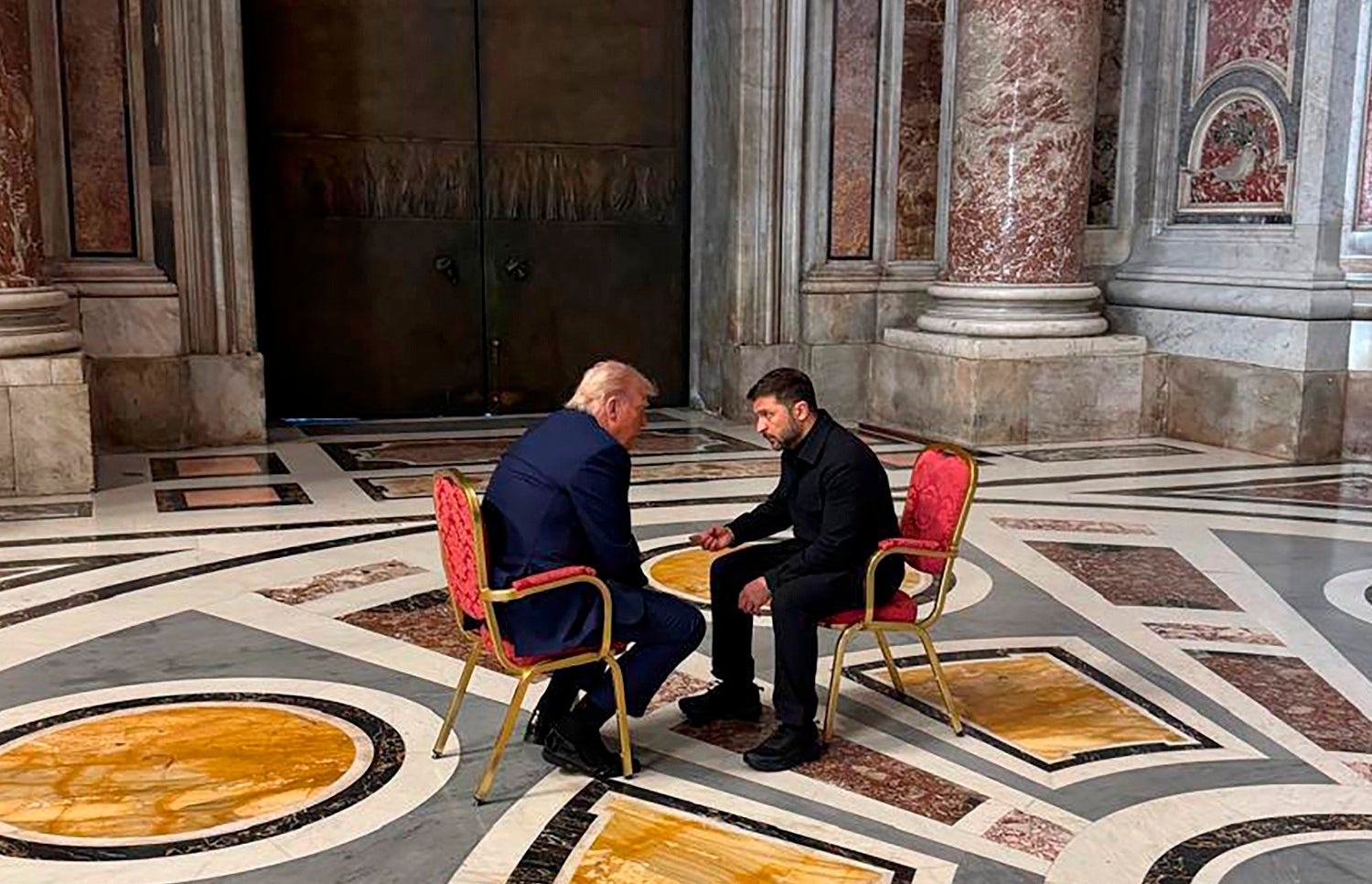
Around the time she was speaking within the centre of St Peter’s Square, Donald Trump and Volodymyr Zelensky were holding a 15-minute meeting somewhere contained in the Basilica complex. Both men, it seemed, respected the solemnity of the occasion – if not the unequivocal support for Ukraine that Francis had shown.
It was the primary time they’d been together for the reason that disastrous Oval Office encounter when vice-president JD Vance and Mr Trump launched attacks on the Ukrainian president, accusing him of “risking World War Three”.
In the Vatican the trouble was to deal with attempting to get a ceasefire agreement done, which Mr Trump has been driving hard but largely echoing Russian positions.
Posting in a while Telegram, Mr Zelensky wrote: “Good meeting. One-on-one, we managed to debate so much. We hope for a result from all of the things that were spoken about.”
He said those topics included “the protection of the lives of our people. A whole and unconditional ceasefire. A reliable and lasting peace that can prevent a reoccurrence of war.”
“It was a really symbolic meeting that has the potential to change into historic if we achieve joint results. Thank you, President Donald Trump!” he added. The White House said the meeting had been positive.
Only Mr Zelensky received applause when he later appeared on the steps of the Basilica, wearing a black military-style suit, and not using a tie. Mr Trump stood out in what seemed to be a blue suit amongst lines of foreign dignitaries mostly wearing traditional black.
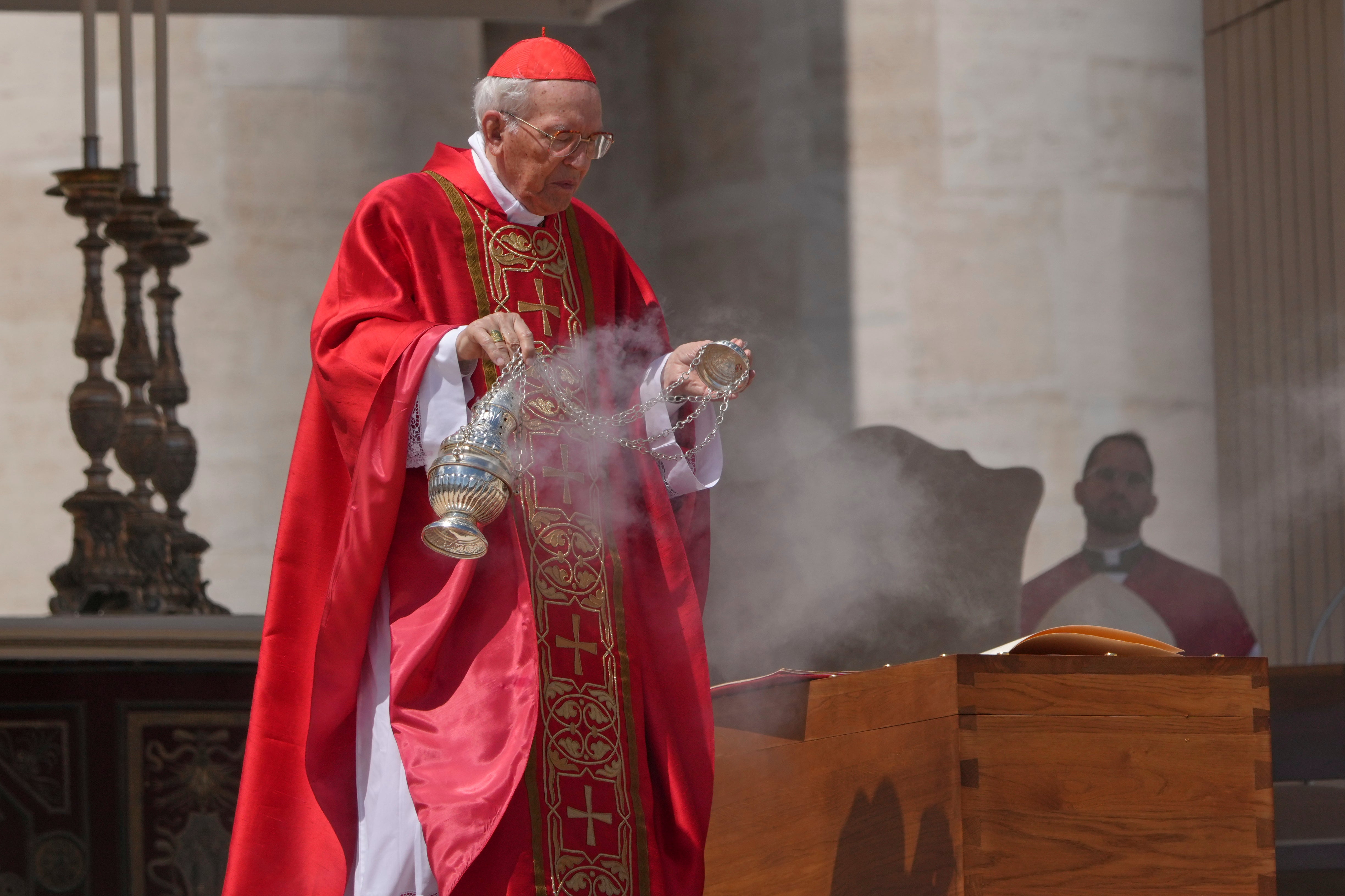
The secular world was further invoked within the spiritual lifetime of Francis during his eulogy by Italian cardinal Giovanni Battista Re.
The cardinal, echoing his late pope, took aim at nativist nationalism masquerading as Christianity. He repeated a phrase Francis had used when criticising Trump’s immigration policies during his first term: it is healthier, he said, “to construct bridges, not partitions”.
“A one that thinks only about constructing partitions, wherever they might be, and never constructing bridges, will not be Christian,” said Pope Francis on the time. “This will not be within the gospel.”
Cardinal Re also invoked Francis’s outspoken take care of migrants, his calls for peace, and his urgent warnings about climate change – issues often rejected or sidelined by Christian nationalists on the suitable.
Re’s message was a reinforcement of Francis’s legacy and a signal of how he, at the least, desires to see the conclave of 135 cardinals vote.
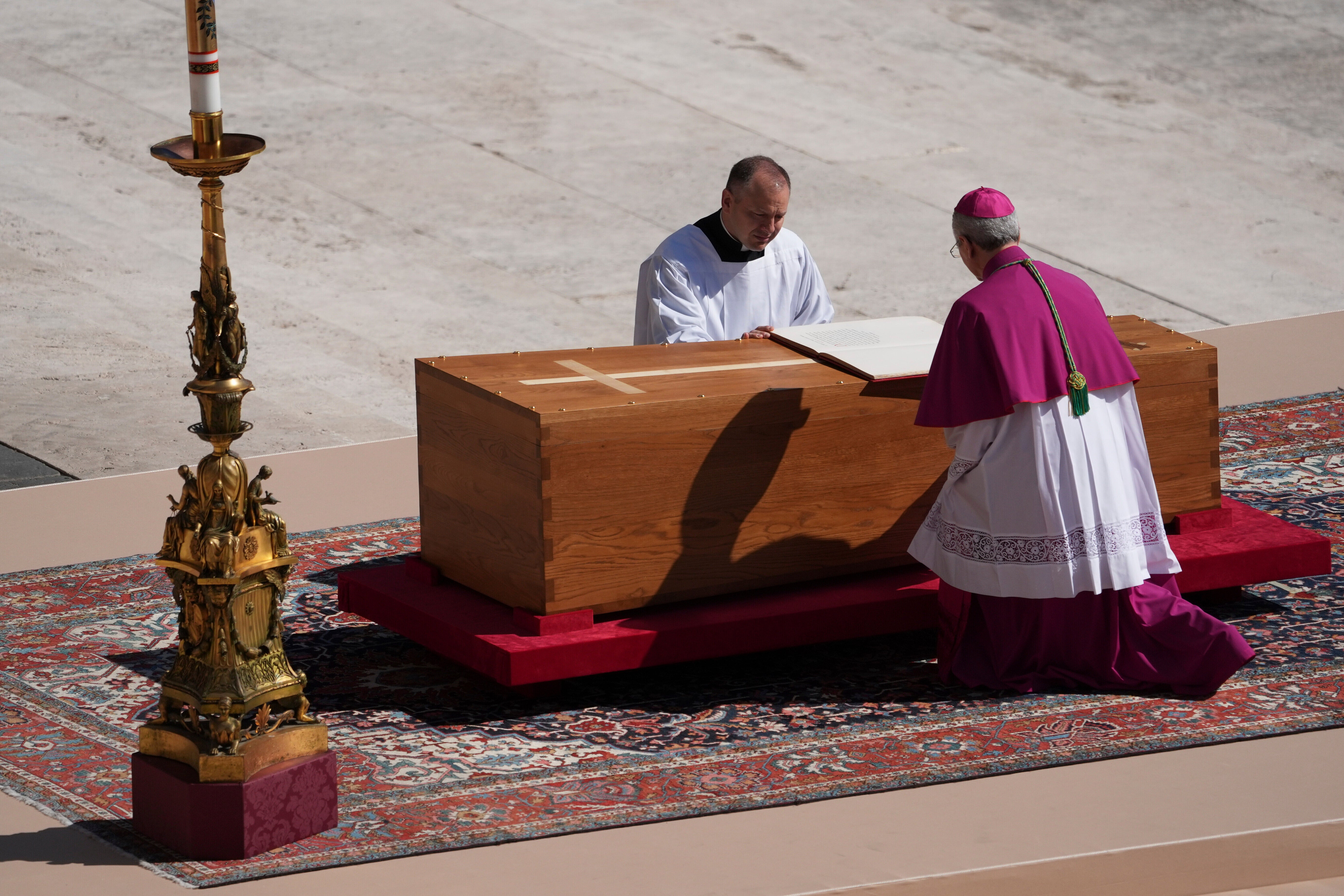
At 91, Re won’t solid a ballot himself, but his words, broadcast to tens of millions worldwide, will echo within the minds of church leaders as they gather within the Sistine Chapel.
During the service, there was a powerful presence of tourists – some there to witness the ceremony, others to capture selfies.
Among the crowds, just a few visitors posed for photos in front of the Basilica, dressed more for a summer party than a funeral. But true to the spirit of the occasion, there was no sign that they were unwelcome.
“Rich in human warmth and deeply sensitive to today’s challenges, Pope Francis truly shared the anxieties, sufferings and hopes of this time,” said Re. He touched people’s hearts, said the cardinal, “in a direct and immediate way”.
“The outpouring of affection that we’ve witnessed in recent days following his passing from this earth into eternity tells us how much the profound pontificate of Pope Francis touched minds and hearts,” said the cardinal.

